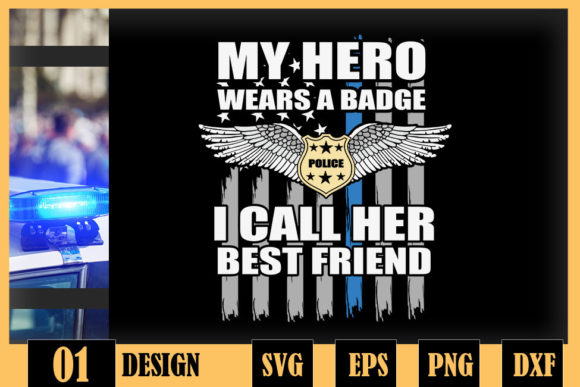
Review: Police Badge Best Friend Design for Embroidery
As a designer who spends more time staring at stitch maps than most people care to admit, I approach every new machine embroidery design with a mix of optimism and skepticism. When I first pulled up the Police Badge Best Friend Police Officer file on my screen, my immediate reaction was one of recognition. This isn't just a generic shape; it captures that specific sentiment of camaraderie and support that defines the law enforcement community. For those of us running a craft business or managing an Etsy seller account, finding graphics that resonate emotionally with a niche audience is half the battle. The other half is ensuring the digital asset actually translates into a high-quality finished product.
First Impressions and Visual Personality
The layout of this Graphics file feels intentional. It balances the authoritative geometry of a badge with the softer, relational aspect of the "Best Friend" theme. Visually, it creates a mood of loyalty and pride. In the context of Crafts, this duality is crucial. You aren't just making a logo; you are creating a symbol of connection. The lines appear clean, which suggests that if digitized correctly, it should handle well on various materials. However, a pretty picture on a monitor doesn't always equal a beautiful embroidered patch or apparel item. The true test lies in how the details hold up when thread meets fabric.
For an embroidery project like this, the visual personality needs to be bold enough to be read from a distance but detailed enough to look professional up close. This design seems to hit that sweet spot, making it a strong candidate for everything from custom apparel to home decor. It avoids the clutter that often plagues themed designs, focusing instead on clear shapes that define the badge structure and the accompanying text or elements.
Real-World Application: The Tote Bag Scenario
To truly evaluate the Police Badge Best Friend Police Officer design, I imagined a specific real-life scenario: creating a custom gift for the spouse of a local officer. I envisioned stitching this onto a heavy canvas tote bag design. This is a common request for handmade product creators—functional items that carry personal meaning. On a tote bag, the fabric texture is substantial, providing a stable base for the stitches. The design's structure would likely shine here, with the badge shape acting as a focal point against the neutral background of the canvas.
Imagine the recipient using this bag for grocery runs or carrying gear to the station. It serves as a subtle yet proud declaration of their relationship. The durability of the stitch work becomes paramount in this use case. If the stitch density is too low, the bag's rough usage might cause the threads to snag or the design to lose its shape over time. Conversely, if the density is too high, the fabric could pucker, ruining the flat, professional look required for a boutique-style item. This design appears robust enough to handle the tension of a tote bag, provided the correct stabilizer is used underneath.
Versatility Across Different Products
Beyond tote bags, this digital embroidery file offers versatility for a range of small shop product ideas. It would translate beautifully onto a sweatshirt embroidery project, perhaps placed on the left chest for a subtle look or centered on the back for a statement piece. The thematic nature of the badge also makes it suitable for holiday embroidery gifts, such as Christmas stockings for police families or personalized ornaments.
For those interested in baby embroidery, scaling this design down for a onesie or a nursery pillow cover could create a touching tribute to a parent's profession. However, caution is needed here. When shrinking designs for infant wear, fine details can get lost. The "Best Friend" text or intricate border elements of the badge must remain legible. If the original file allows for resizing without losing definition, it becomes a valuable asset for creating personalized gift options for new parents in the force.
Additionally, this graphic is ripe for commercial embroidery applications. Uniform shops could utilize it for morale patches, while independent makers might incorporate it into printable mockup collections to showcase their design assets. The key is understanding where the design fits best. It feels at home on structured items like caps or jackets, where the badge motif aligns with the garment's inherent formality.
Technical Considerations and Fabric Challenges
While the aesthetic appeal is strong, practical execution requires attention to detail. One area requiring careful consideration is the choice of fabric. On textured fabrics like terrycloth towels or fuzzy fleece, the crisp lines of a badge design can sometimes get swallowed by the pile. In these cases, using a topping stabilizer is non-negotiable to ensure the satin stitch or fill stitch areas sit cleanly on top of the material.
Curved surfaces present another challenge. If you plan to apply this to a cap, the curvature of the front panel can distort the circular or shield-like aspects of the badge. It is essential to hoop the cap correctly and perhaps adjust the pull compensation settings in your software if you have access to the editable source files. Speaking of software, the product description notes compatibility with Cricut Design Space, Silhouette Studio, Corel Draw, Adobe Illustrator, and Adobe Photoshop. This suggests the file may be vector-based or a high-resolution raster image intended for cutting or printing, rather than a pre-digitized stitch file (.pes, .dst, etc.).
Crucial Note: Before attempting to stitch this out, you must verify the file format. If this is a graphic file (like SVG or PNG) intended for cutting machines or print-on-demand, it will need to be digitized into a stitch file by a professional digitizer before it can be used on an embroidery machine. Do not assume it is ready-to-stitch unless explicitly stated. Attempting to run a non-stitch file through an embroidery machine will result in errors or damaged equipment.
Ensuring Quality and Professionalism
Assuming you have the correct stitch file or have had it professionally digitized, the next step is testing. Always test the design on scrap fabric first. Check the thread colors against your intended material. A silver or gold metallic thread might enhance the "badge" look, but these threads can be temperamental and prone to breaking if the tension is too tight. Contrast is key; ensure the design pops against both light and dark backgrounds.
For Etsy listings and boutique branding, presentation is everything. A poorly stitched badge looks sloppy and can damage customer trust. Inspect small details closely—are the corners sharp? Is the underlay showing? Does the design lay flat after washing? These factors directly influence the perceived value of your handmade product. A well-executed Police Badge Best Friend Police Officer design reinforces professionalism and shows that you care about the quality of your output.
Final Verdict for Creators
The Police Badge Best Friend Police Officer concept holds significant potential for creators targeting the law enforcement niche. Its emotional resonance makes it a powerful tool for building connection with customers. Whether you are creating custom apparel, decorative home items, or specialized gifts, this design offers a solid foundation. However, success depends entirely on technical execution. Respect the limitations of your materials, verify your file formats, and never skip the testing phase.
By approaching this embroidery file with a critical eye and a commitment to quality, you can transform a simple graphic into a cherished keepsake. For creative entrepreneurs and hobbyists alike, it represents an opportunity to deliver meaningful, high-value items that celebrate the bonds within the police community. Just remember to confirm licensing terms before selling finished items or digital products derived from this asset to ensure you are operating within legal boundaries.