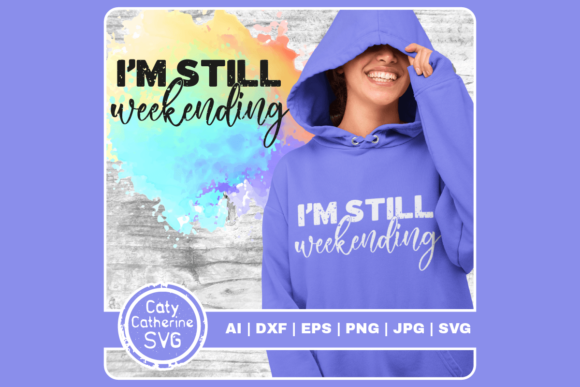
I'm Still Weekending: A Designer's Review for Embroidery
As someone who spends more time staring at stitch simulations than actual weekends, I approach every new machine embroidery design with a mix of curiosity and skepticism. When I first pulled up the I m Still Weekending Funny Weekend Quote by Caty Catherine, my immediate reaction wasn't just about the humor—it was about the technical feasibility. We've all seen those "grunge" or "distressed" SVG files that look fantastic on a screen but turn into a bird's nest of thread breaks once they hit the hoop. This review isn't a sales pitch; it's a practical breakdown of how this specific graphic translates from a digital Graphics asset into a tangible, stitched reality for your craft business or personal projects.
The Vibe: Relatable Humor Meets Textured Aesthetics
The first thing that stands out about I m Still Weekending Funny Weekend Quote is its mood. It captures that universal feeling of wanting to extend the weekend indefinitely, wrapped in a distressed, grunge aesthetic. For an embroiderer, "distressed" is a double-edged sword. In vector art, it adds character and a vintage feel. In embroidery, however, it can be tricky. The broken lines and weathered texture suggest a design that relies heavily on the interplay between positive and negative space.
Visually, the layout feels balanced enough for a standard chest placement on a hoodie or a centered design on a tote bag. The typography appears bold enough to hold its own, which is crucial. If the letters are too thin or the gaps in the "grunge" effect are too wide, you risk the design looking accidental rather than intentional once stitched. My initial assessment is that this design shines best when used as a statement piece on casual wear, where the slightly rough-around-the-edges look complements the fabric texture rather than fighting against it.
Real-World Application: The Sweatshirt Test
To truly evaluate this embroidery file, I imagined a specific scenario: a custom order for a local boutique needing a run of cozy fleece sweatshirts for their fall collection. The client wanted something fun but not childish. I m Still Weekending Funny Weekend Quote fits this brief perfectly. However, executing it requires strategy.
Fleece and French terry are textured fabrics. When you apply a distressed design to a textured surface, the "noise" of the fabric can sometimes get lost in the "noise" of the design. To make this work, I would recommend using a high-contrast thread colors scheme. A bright white or cream thread on a charcoal or navy sweatshirt would make the grunge details pop. Conversely, trying to stitch this in a tone-on-tone color might render the distressed elements invisible, defeating the purpose of the design.
For a personalized gift like a teacher's tote bag or a gym buddy's duffel, this design offers immediate recognition. It's the kind of quote that gets a chuckle and a nod of agreement. But remember, when moving from a SVG Cut File to an embroidery project, you aren't just cutting vinyl; you are building with thread. The distressing needs to be converted carefully into satin or fill stitches that don't leave large, unstable gaps.
Technical Considerations for Stitching Success
Here is where we need to get serious about the mechanics. Since the product description lists this as an SVG, PNG, and EPS, it is primarily a cut file intended for die-cutting machines or printing. If you are an embroiderer, you cannot simply load an SVG into most standard home embroidery machines without conversion or purchasing a dedicated digital embroidery file version (like PES, DST, or XXX). Assuming you have access to a digitized version or are digitizing this yourself based on the graphic, here are the critical factors:
- Stitch Density and Underlay: The grunge effect creates many small, isolated islands of stitching. Without proper underlay, these tiny sections will pucker or pull away from the fabric. You must ensure the digitizer has added sufficient underlay to anchor these bits.
- Stabilizer Selection: For a design with this much potential movement due to its fragmented nature, a cut-away stabilizer is non-negotiable, especially on stretchy fabrics like t-shirts or knits. Tear-away might leave the edges of the distressed letters fraying over time.
- Small Details: Check the smallest fragments of the letters. If a piece of the "grunge" is smaller than 3mm, it might not stitch out cleanly and could look like a glitch. You may need to manually simplify the vector before digitizing to remove micro-details that thread can't replicate.
- Hoop Size: While the text isn't massive, ensure your hoop size accommodates the full width of the phrase without cramming. Crowding the design near the hoop edge can lead to registration issues.
Where to Use It (And Where to Be Careful)
This design is versatile, but it isn't universal. It excels on custom apparel like hoodies, crewnecks, and canvas tote bag design projects. It also works well on embroidered patch blanks, where the backing provides extra stability for those tricky distressed edges.
However, proceed with caution on certain materials. Avoid using this on very thin, silky fabrics where the density of the text might cause gathering. Also, be wary of curved surfaces like caps unless the design has been specifically column-digitized for that curvature; the horizontal flow of the text might distort on a front panel. For baby embroidery, consider skipping the heavy distressing in favor of a solid fill to prevent any loose threads or scratchy textures against sensitive skin.
If you are an Etsy seller or running a small shop product line, think about the washability. Distressed designs can sometimes mimic wear and tear, but if the stitching isn't secure, actual wear and tear will happen faster. Always test wash your sample. Does the thread hold? Does the fabric pucker after the first spin? These are the details that build customer trust and protect your brand reputation.
Final Verdict for Creators
The I m Still Weekending Funny Weekend Quote is a strong contender for anyone looking to add some personality to their Crafts inventory. Its strength lies in its relatability and trendy aesthetic. However, its success depends entirely on execution. Do not assume the SVG will translate perfectly to thread without adjustment.
Before committing to a production run or listing it as a commercial embroidery item, take the time to stitch a sample on scrap fabric identical to your final product. Check the back of the hoop for excessive buildup. Verify that the licensing from Caty Catherine allows for commercial use of the finished physical goods, as terms can vary between designers.
In the world of handmade goods, the difference between a professional finished product and a hobbyist mistake often comes down to these technical nuances. If you respect the limitations of the medium and prepare your files correctly, this design can be a standout star in your collection, bringing smiles to customers and consistent quality to your portfolio. Happy stitching, and may your weekends be as long as your thread spools!